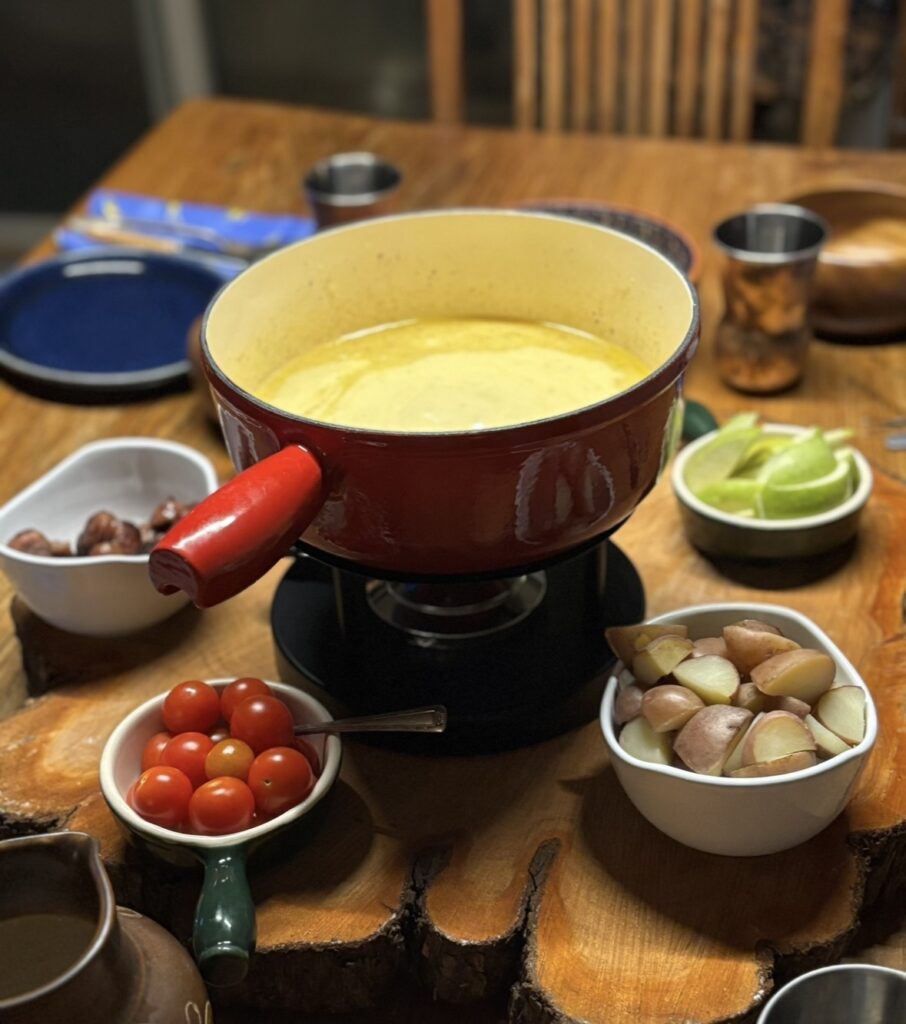
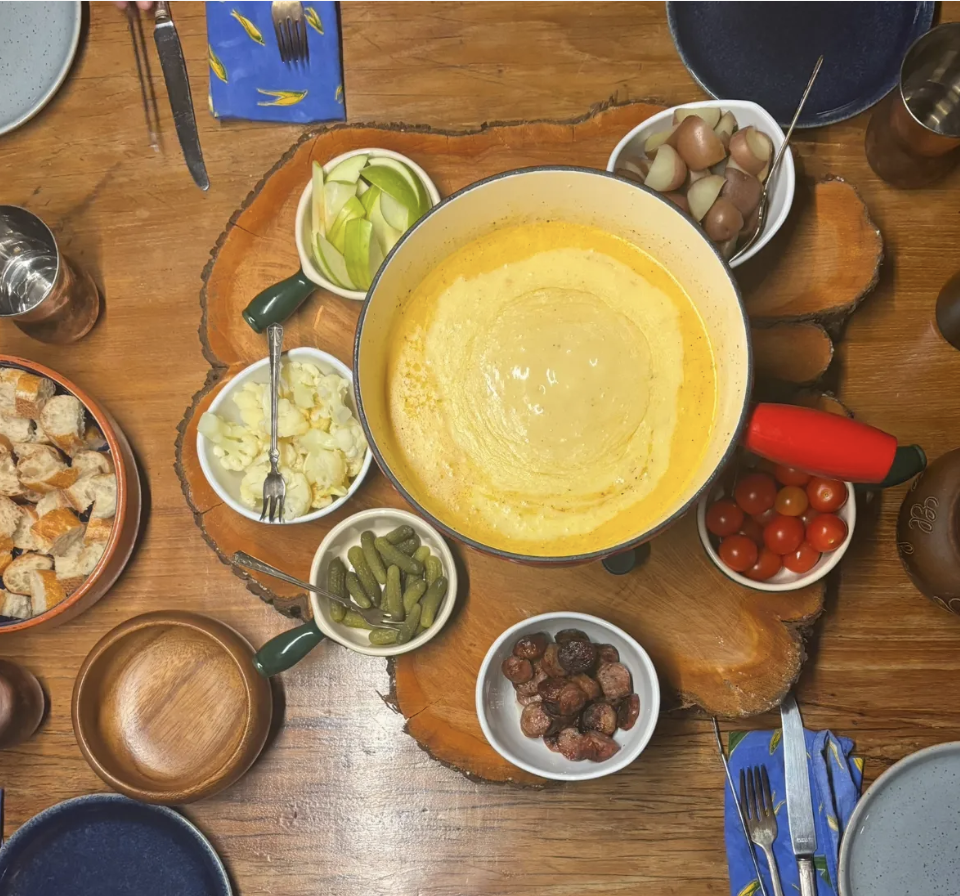
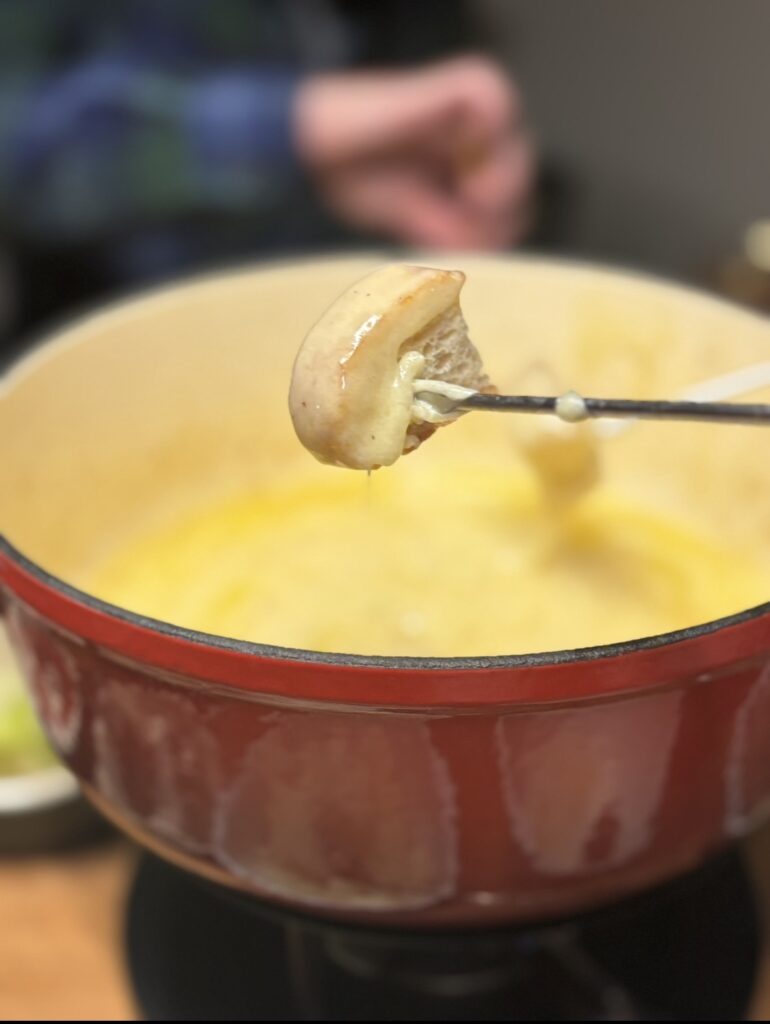
There was a moment of silence as our long forks slipped into the caquelon filled with a bubbling mix of Gruyère, Emmentaler, garlic, kirsch and white wine. After a gentle swirl of the forks, we retrieved our crusted bread, now dripping with smooth, silky deliciousness, pausing briefly before returning that first bite to our plates. We collectively exhaled with a soft “ahhhh,” then lifted the cheese-covered morsel of bread towards our mouths, giving it a gentle blow to cool before we entered the realm of delicious food and tradition.
We followed that same ritual for the next hour – stabbing, dipping, exclaiming “ahhh,” before gently plunging the sausage, green apples, gherkins, tomatoes, potatoes, cauliflower and bread in the tangy cheese concoction. It’s a ritual that has been performed for centuries; one that involves traditional ingredients paired with the time-honored ritual of communal eating. We laughed, we shared, we slowed down and felt togetherness.
Participating in the centuries-old ritual actions, made me feel as if I was doing my part – bringing that tradition forward – where locale-specific ingredients paired with the ritual of preparation, followed by the tradition of experiencing the meal together.
With each bite, I felt respect for the work taken to bring this delicious meal to my table. The cows and their tenders, who trekked to the high altitudes for summer grazing in the Alps, descending once the food source begins to disappear and the temperature begins to drop; laden with jugs of milk redolent with the flowers from higher altitudes in tow.
The cheesemaker who painstakingly transform the milk into traditional cheese that evoke the taste from the region.
Preparing those ingredients in my beautiful and efficient cast iron caquelon centered on the table, we honored its predecessor, the simple earthenware vessels, with a squat, yet broad shape that transformed ingredients into an unforgettable communal experience.
Embracing the Positive Rituals
We all have our own rituals – those brought to our lives by our country, our ancestors, our immediate family, our friends, our circumstances. Some rituals are good for us, while others stagnate us, keeping us from experiencing something outside of our own small box of life.
Whereas the bad rituals keep me stuck in a place, ruminating and not moving forward, the good rituals are the ones that continually make us think, act, move forward and feel. For a few short hours, we experienced the positive ritual associated with fondue – experienced not only in Switzerland, but France , Germany – and beyond.
While we did not gather bits and pieces of leftover cheese to eat for a frugal meal, as history reminds us of the origins of Gruyère and other alpine cheese, nor did we just return from the slopes of the Alps, we did experience that allure of the fondue ritual with friends gathered around our table overlooking our own little mountain just outside our Northern California home.
Whether it is a cozy winter’s evening filled with fondue, or time with friends chatting over a delicious meal, this evening was a reminder of the importance of creating the little rituals that will build our tradition of togetherness.
This Classic Swiss Cheese Fondue recipe is a crowd pleaser
Prep and Serving Suggestions: For an authentic taste and service, I used Gruyere & Emmentaler from Mifroma, and the caquelon from Kuhn Rikon. Pair it with a delicious Chasselas from Domaine Dardagny
- 1 garlic clove, halved
- 1 lb Gruyère cheese, grated
- ½ pound Emmentaler cheese, or other Swiss cheese, grated
- 1 cup dry white wine
- 1 Tbsp plus 1 tsp cornstarch
- 1 tsp fresh lemon juice
- 1-½ Tbsp kirsch
- Freshly ground black pepper
- Freshly grated nutmeg
Rub the inside of a cheese fondue pot, or medium enameled cast-iron casserole, with the garlic clove; discard the garlic.
Combine the grated cheese and cornstarch. Add lemon juice and white wine to the warmed pot, allow to warm for 15 seconds, then add the cornstarch and cheese mixture, stirring occasionally until the cheese begins to melt – about 5 minutes.
Reduce the heat to low and add the kirsch, along with a generous amount of pepper and nutmeg, and cook, stirring gently, until creamy and smooth – about 3 minutes.
Don’t overcook, otherwise the cheese will get stringy.
Fondue Fix-its
Sometimes things get a bit stringy, or clumpy . .
If the fondue has been over-cooked and the cheese is turning into hard lumps, or is stringy, add a teaspoon or two of lemon juice (or wine) to help restore the texture.
If the cheese has split and looks greasy but not lumpy, add extra cornflour (cornstarch) to help re-emulsify the mixture.