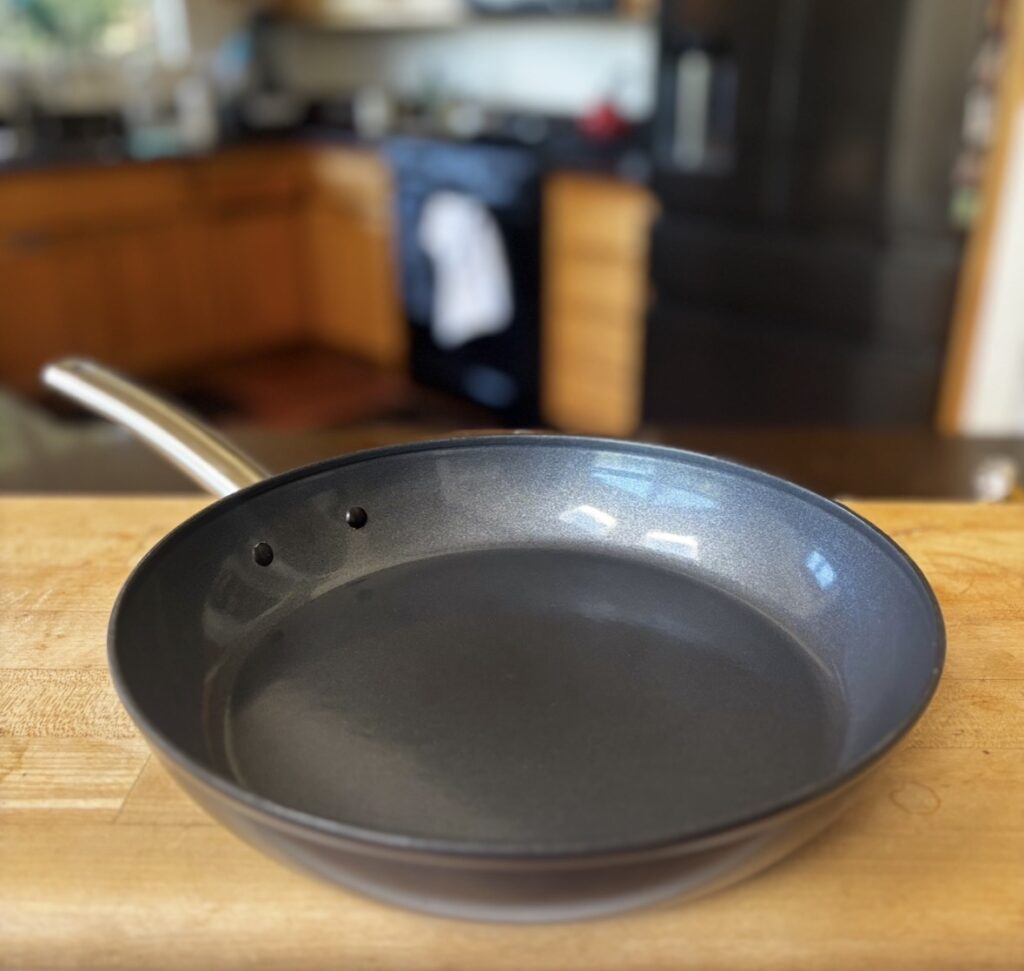
There are a lot of things that can make cooking frustrating. Sometimes it’s finding the time to prepare meals, other times it’s not knowing what to prepare, or even not having the right ingredients on hand. And then there are those moments when you’re finally cooking, and your cookware doesn’t perform the way you expect it to. That’s when a nonstick frypan that once made cooking easier becomes a source of frustration. Over time, the nonstick coating has worn down, food begins to stick, and the pan no longer performs the way it once did.
I’ve tested my share of cookware through the years, many of them nonstick, and I’ve seen firsthand how much difference a good pan can make. I’ve also watched the nonstick category evolve considerably over the years, and the one thing that has remained constant is that consumers want a pan that makes cooking easier and continues to perform in the long term.
The Evolution of Nonstick
Many years ago, when I wrote about the nonstick category, I spoke at length with people at companies including DuPont and Whitford, trying to distill the complicated science behind nonstick coatings into information that specialty retailers could use to educate their customers. At the time, PTFE was the dominant nonstick technology, and one of the challenges manufacturers faced was getting the coating to adhere securely to the metal pan. Without getting too technical, PTFE is chemically non-reactive, which makes it difficult to bond to other materials.
To do this properly, manufacturers developed ways to overcome that challenge, including preparing the metal surface and applying multiple layers of coating before using high heat to create a durable bond. There was much more to the process, but the goal was straightforward: to create a coating that would stay put and perform well over time.
However, as the category evolved, questions about the environmental impact of certain chemicals used in PTFE production came to the forefront. PFOA, for example, is a toxic PFAS chemical formerly used to manufacture nonstick coatings. Because it builds up permanently in our ecosystems and bodies, it was phased out in the United States because of health and environmental concerns.
Enter the new era of nonstick.
Today’s nonstick cookware includes both traditional PTFE and newer ceramic-based coatings. Modern PTFE formulations can offer excellent nonstick performance and durability, without PFOA, though PTFE itself remains a fluoropolymer (a type of PFAS). Meanwhile, ceramic coatings offer an alternative that is entirely PFAS-free. Both can make cooking easier, but they have different strengths.
The goal isn’t simply to create a nonstick surface that performs well when a pan is new. The bigger challenge is creating a pan that continues to perform as it is heated, cooled, cleaned and used over and over again.
Start With the Pan, Not the Coating
When I began testing the newly introduced Forged Steel Series from Hell’s Kitchen Cookware, what I quickly realized was that its nonstick capabilities was about much more than what goes on the surface of the pan. The difference starts with how the entire pan is constructed and how those materials work together.
Jeff Leitman, CEO of Hell’s Kitchen Cookware, gets right to the point: “Most pans force you to choose: Non-stick that doesn’t last. Stainless that burns everything you don’t babysit. Cast iron that weighs more than the food.”
That was the challenge they set out to address. “Rather than creating a nonstick to go on any old pan, we focused on the design from the start,” says Leitman. That approach is particularly important because, as Leitman explains, “Most nonstick pans fail the same way. The core is too thin, the heat is uneven, the ceramic cracks because there’s nothing stable underneath it, or the handle works loose after a year of real use. We went back to the foundation and built this differently, layer by layer.”
What’s Under the Nonstick?
Where many ceramic nonstick pans rely on an aluminum core, the Forged Steel Series starts with a thick, heavy-gauge forged steel foundation. From there, a dual layer of enamel is applied inside and out, followed by the PFAS-free ceramic nonstick coating.
The thinking behind this design is that these materials aren’t working independently; instead, they work together. As a pan heats and cools, its materials expand and contract. If those materials move at significantly different rates, that movement can put stress on the layers of the pan over time.
The the premise Hell’s Kitchen worked on: a different way of looking at nonstick cookware. Instead of asking, “How good is the coating?” the question becomes, “How can we design a pan that supports the coating?”
According to Hell’s Kitchen, the combination of forged steel, enamel and ceramic is designed to create a more compatible structure, providing a stable foundation for the nonstick coating.
In other words, the nonstick coating isn’t being asked to do all the work. The pan itself is designed to support the coating.
More Than Nonstick
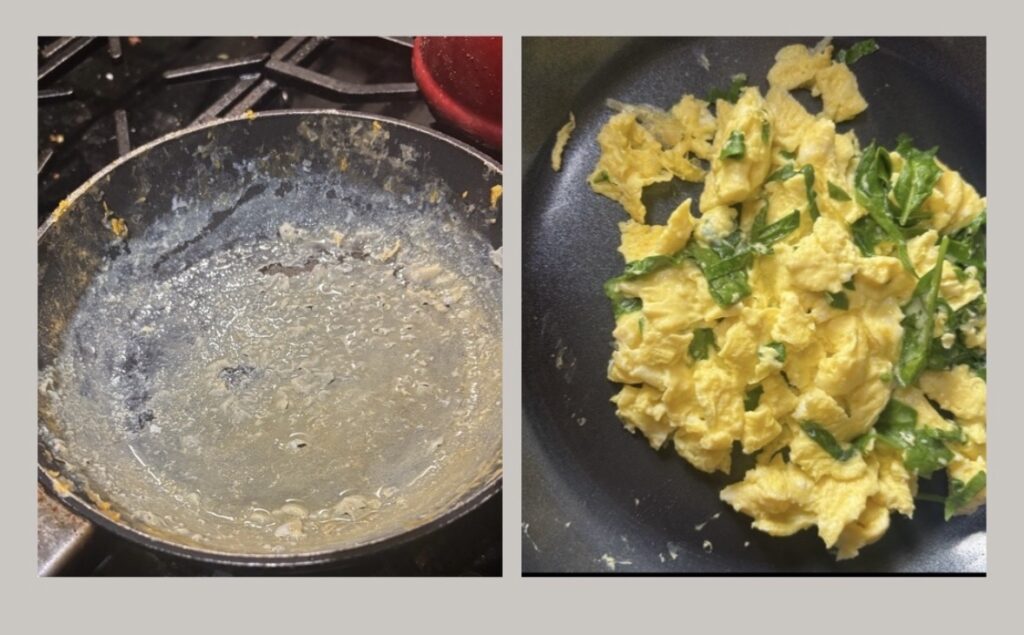
The more I used the Forged Steel Series, the more it became clear that the difference was not only in the nonstick surface, but in how the entire pan was designed to work together. And both my husband and I noticed the difference.
First and foremost, it really is a great nonstick pan. Food releases easily, and the cooking surface performs the way you expect a nonstick surface to perform. But what surprised me was how versatile the pan was.
I could sear a steak on the stovetop and then move the pan directly into the oven to finish cooking. That’s not necessarily what I think of when I think “nonstick,” but the Forged Steel Series handled both steps easily. The even heat distribution was noticeable, particularly when searing, when you want the cooking surface to heat consistently rather than have areas that are noticeably hotter than others.
I also noticed something during more everyday cooking: the pan retains heat. When making an omelet, for example, I could turn off the heat and let the residual heat in the pan finish cooking it. That ability to hold onto heat meant I wasn’t continually adjusting the burner or worrying about losing the temperature I had built up.
Those experiences made the construction of the pan more meaningful to me. The forged steel isn’t simply there as an alternative to an aluminum core; it affects how the pan behaves during cooking. The result is a pan that provides the food release I expect from nonstick cookware while behaving like a substantial piece of cookware underneath.
Leitman describes the goal simply: “You want release, even heating and ease of cleaning.”
Additional design notes included the handle. The lower-profile handle, for example, makes it easier to move the pan into the oven, while the weight and balance are intended to make the pan comfortable to use.
The Forged Steel Series is also made in Spain using what Hell’s Kitchen describes as a patented forged-steel manufacturing process.
That construction is worth exploring further because forging a thicker steel material requires a different manufacturing approach than forming a thinner piece of metal. According to the company, its process is designed to create a more consistent structure while minimizing stress in the steel.
And again, the point isn’t simply that forged steel sounds different from stamped aluminum. It’s what that difference is intended to accomplish in the finished pan.
The Heat Question
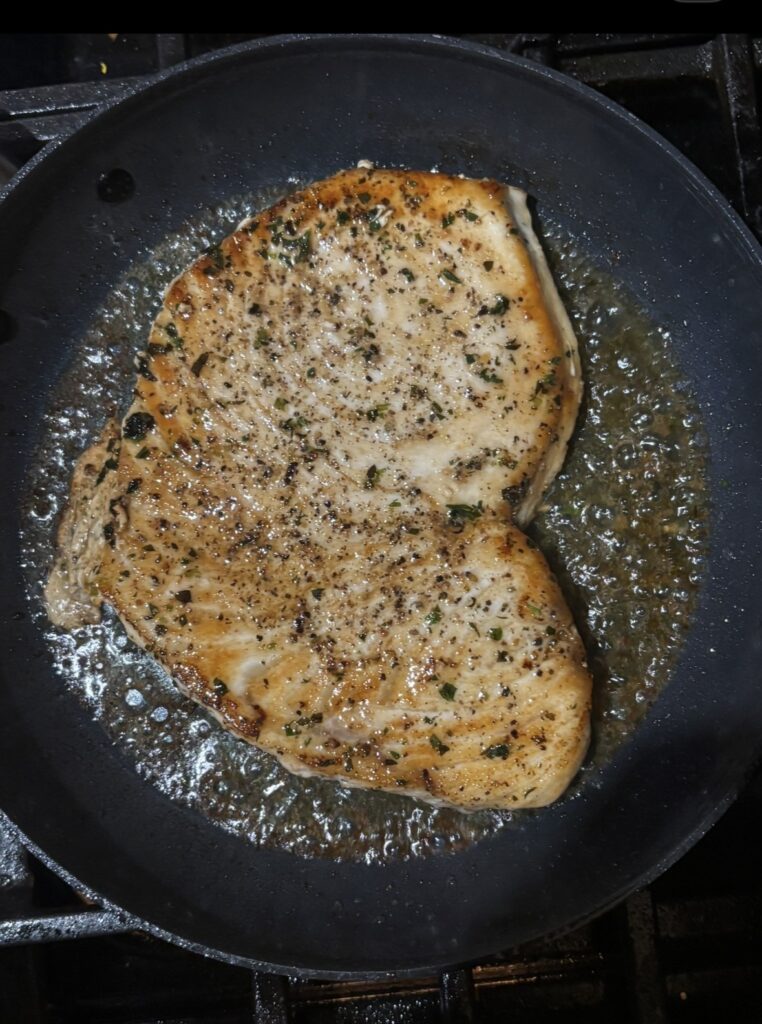
There is another piece of the nonstick conversation that often gets overlooked: how we actually use our pans.
Many home cooks still believe that turning up the heat is the quickest way to get better results. And while high heat has its place (particularly when searing), it isn’t necessary for everything we cook. In fact, excessive heat can be one of the things that contributes to the deterioration of nonstick cookware.
Leitman believes part of the problem is that consumers have become accustomed to turning the heat higher than necessary.
With a pan designed to retain and distribute heat efficiently, the idea is to start lower and allow the pan to do more of the work.
That may require a bit of a mindset change for anyone accustomed to immediately turning the dial toward high. Medium heat on one pan isn’t necessarily the same as medium heat on another.
That’s something I’ve learned over the years of cooking with different types of cookware. Cast iron, stainless steel, aluminum and nonstick all respond differently to heat. Understanding how a particular pan behaves can make as much difference as the recipe itself.
Use Nonstick for What It Does Best
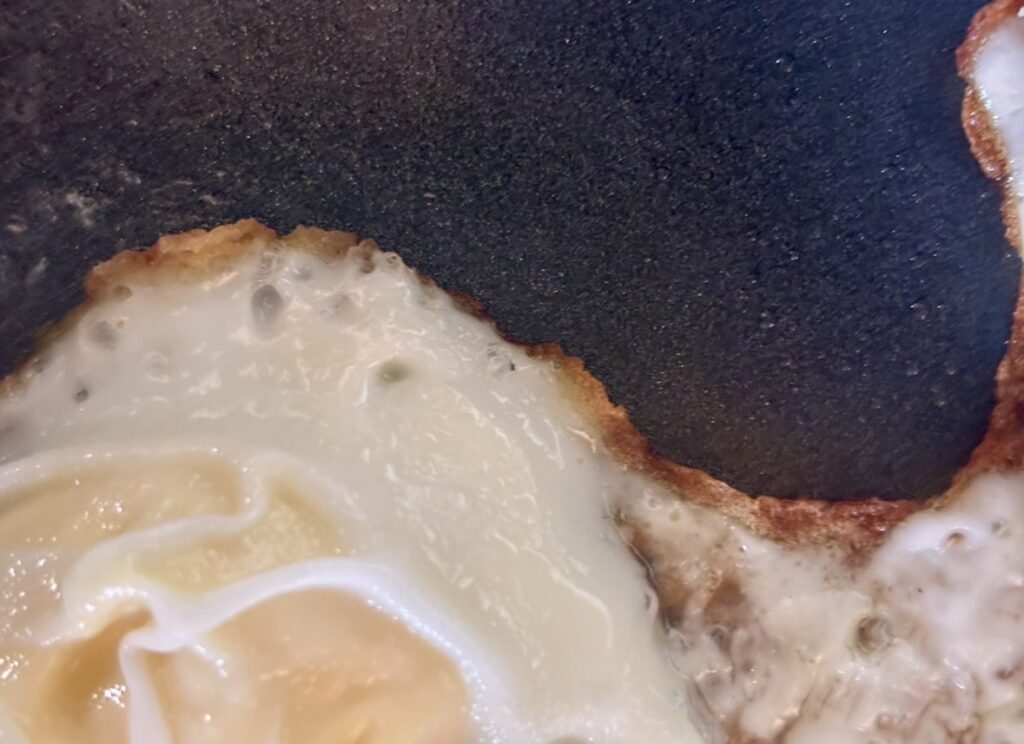
There is also a tendency to expect one pan to do everything.
Nonstick cookware is particularly useful for foods that are delicate, prone to sticking or difficult to turn in a traditional metal pan. Eggs are an obvious example, but the list also includes delicate fish, pancakes, crepes and foods with melted cheese.
These are the moments when nonstick really earns its place in the kitchen.
But that doesn’t mean it should necessarily replace every other pan you own.
A nonstick pan isn’t the pan I would automatically reach for when I want to develop a deep crust on a steak or aggressively stir-fry ingredients over very high heat. That’s where other cookware materials can have an advantage.
The better approach may be to think of cookware as a collection of tools, each designed to do particular jobs well.
That’s especially relevant with the Forged Steel Series. Hell’s Kitchen isn’t positioning it as a pan that replaces everything else in the kitchen. Rather, it is a deliberately designed pan intended to combine the advantages consumers want from nonstick cookware with a more substantial foundation.
Rethinking What Makes a Nonstick Pan Good
What interests me most about this approach is that it shifts the conversation.
For years, the nonstick discussion has largely centered on the coating: how slippery it is, how many layers it has, what it is made from and how long it will last.
Those things still matter. But perhaps the better question is what is underneath that coating.
A nonstick surface can perform beautifully when a pan is new. The real test is what happens after months and years of heating and cooling, cooking and cleaning.
That’s where construction becomes important.
The Forged Steel Series takes a different approach by starting with a substantial forged-steel foundation and building the pan around the nonstick surface rather than simply adding a coating to an existing pan design.
Whether that ultimately translates into a longer-lasting nonstick experience is something that only time—and plenty of cooking—will tell.
But after years of watching the nonstick category evolve, I find the idea compelling.
Maybe the next step in nonstick cookware isn’t simply creating a better coating.
Maybe it’s creating a better pan around the coating.